“I don’t want to go to school.”
“My friends won’t play with me.”
“Nothing’s wrong. I’m just tired.”
If children repeatedly say things like this, it may be more than simple complaining—it could be an important warning sign that they are experiencing bullying or emotional distress. Avoiding school, expressing feelings of isolation, and downplaying problems are common indicators seen in children who are victims of school bullying.
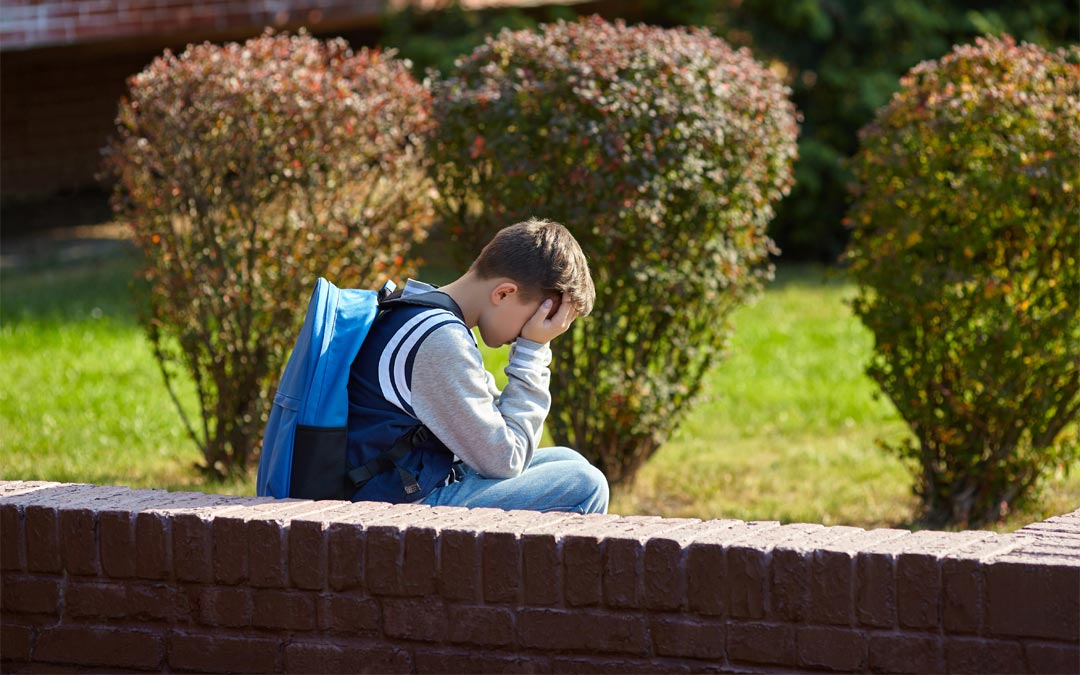
In the United States, August is observed each year as Don’t Be a Bully Month. During this time, schools and local communities organize activities to raise awareness about the seriousness of bullying and to promote prevention and solutions. As bullying—threatening students’ physical and mental well-being—has become a significant social issue, prevention campaigns continue to expand nationwide.
Schools

Help students learn empathy and respect through workshops, discussions, and role-playing activities
Local Communities and Private Organizations

Conduct campaigns and forums to raise awareness of the importance of bullying prevention
Individuals

Respond to cyberbullying through hashtag movements such as #dontbeabully and #stopbullying
According to a UNICEF survey of adolescents in 30 countries, one in three has experienced online school bullying. In addition, the U.S. National Center for Education Statistics (NCES) reports that approximately 20% of students in the United States experience bullying at school. In the short term, bullying increases anxiety and depression and lowers self-esteem; in the long term, it negatively affects academic performance and social development.
As the new school semester begins in September, active participation by students, parents, and teachers in bullying prevention efforts provides a valuable opportunity to help children build a healthy foundation for school life.
Expected Effects of Bullying Prevention Activities

Improvement in students’ empathy and self-esteem

Creation of a safe school culture and protection of victims
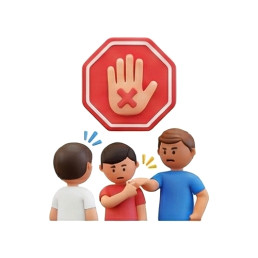
Reduction in bullying incidents

Expansion of social awareness and strengthening of community solidarity
Bullying prevention activities go beyond simply raising awareness; they help students build positive relationships and contribute to a tangible reduction in school bullying.
Anti-Bullying Forum Held
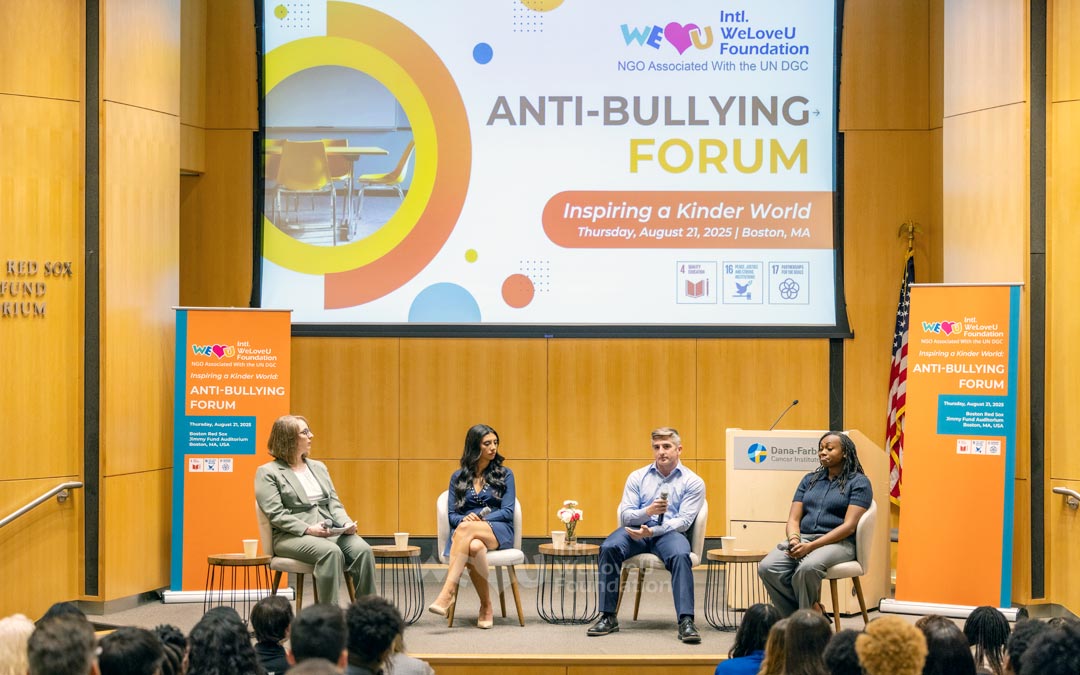
On August 21, WeLoveU held an Anti-Bullying Forum as part of the “Inspiring a Kinder World” project at the Boston Red Sox Jimmy Fund Auditorium at the Dana-Farber Cancer Institute in Boston, Massachusetts. A total of 115 participants—including students, parents, teachers, social workers, and WeLoveU members—attended the event, where they discussed the causes and impacts of school bullying and explored ways to create healthier school environments.
The program included an introduction to volunteer activities by WeLoveU Boston members, a video message from actress and television host Clarissa Molina, and a panel discussion on bullying prevention.
“Thank you to WeLoveU for addressing the important issue of bullying. I also experienced bullying when I came to the United States as a high school student because I couldn’t speak English, but I was able to overcome it.”
Clarissa Molina
Clarissa Molina emphasized the importance of speaking up and taking proactive steps to address school bullying.
Following her remarks, three panelists joined the discussion: Kiersten Khoury, Miss Massachusetts 2024; Patrick Bridge, Health and Wellness Manager at The BASE, an organization that operates sports, career, and health programs for youth; and Shakira Smith, Family Liaison at Shaw-Taylor Elementary School in Boston.



The panelists shared their experiences and exchanged perspectives on how to support children at school, at home, and within the community. The discussion focused on three key themes: understanding and preventing bullying, cyberbullying, and fostering emotional intelligence and conflict resolution skills.
Kiersten Khoury spoke about her experience of being bullied due to dyslexia and other learning disabilities. “Even though I wasn’t naturally timid, I became withdrawn and was perceived as a quiet child,” she said. “We need to pay closer attention to quiet children.” She also suggested that greater inclusion of students with learning disabilities can help reduce incidents of school bullying.
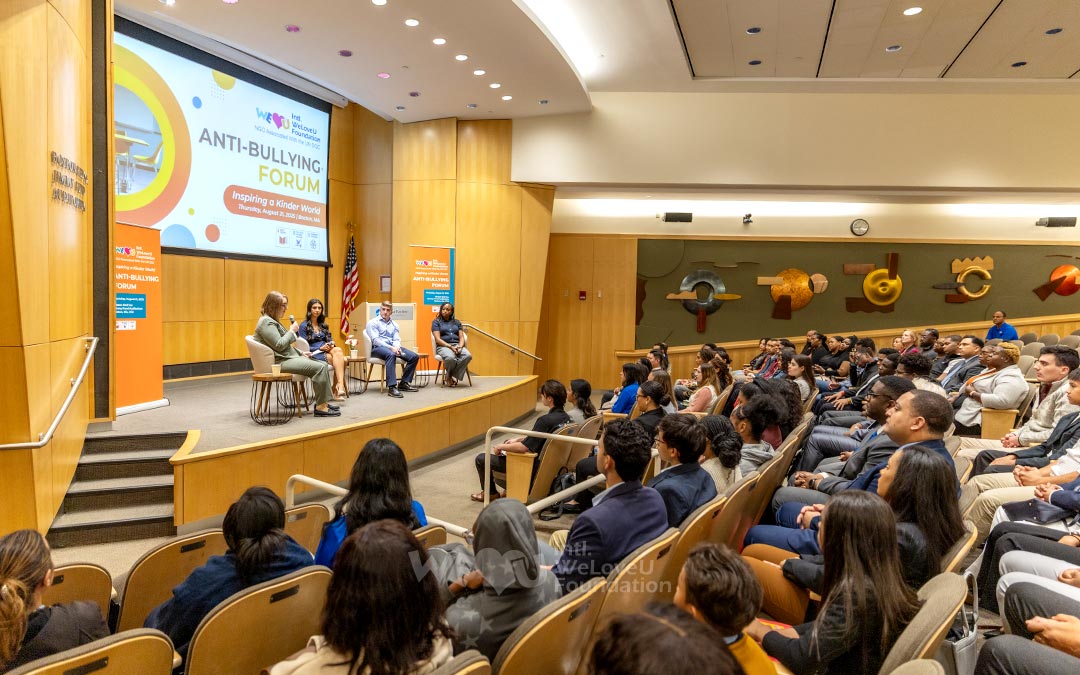
Patrick Bridge noted that in sports, expressions of camaraderie can sometimes be mistaken for bullying. He emphasized that children should be taught to clearly express when they feel “uncomfortable” or “don’t like something,” and to avoid teasing others based on race or family background.
Shakira Smith identified open communication and building trust with children as key strategies for preventing cyberbullying. “Children need to feel safe asking adults for help rather than hiding problems when they arise,” she said.
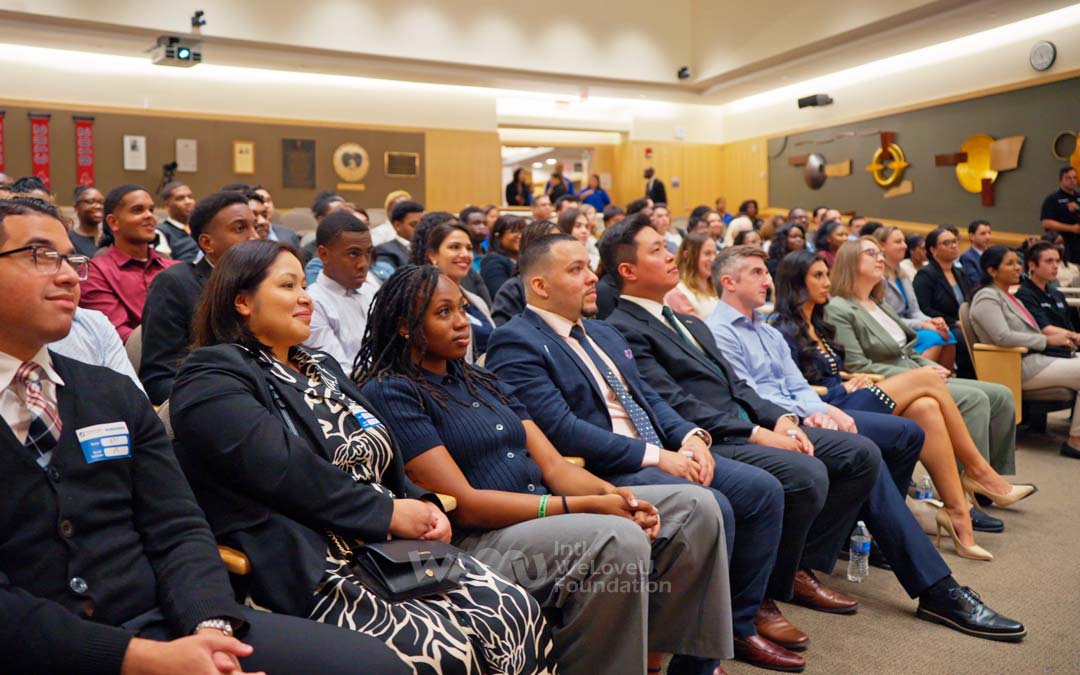
The panel also explored ways to help students develop the resilience needed to respond to bullying. Kiersten Khoury remarked, “Who you are is something you decide for yourself,” adding that as children receive consistent positive reinforcement, they gain the confidence to speak up for themselves.
Patrick Bridge emphasized, “In sports, teams succeed when teammates respect and cooperate with one another,” noting that “every action within a team impacts the shared goal.”
Shakira Smith added, “Parents are a child’s first supporters,” stressing that even small complaints can be warning signs of school bullying.
As the discussion concluded, the panelists delivered a unified message: everyone must speak up and take action to stand against school bullying.
A Word for Responding to Bullying

“Kindness is free, but its impact is beyond imagination.”

“Every child has the right have their voice heard.”

“School bullying is a shared responsibility of families, schools, and communities.”
A warm and inclusive world begins with respecting and valuing every individual.
WeLoveU will continue to listen to children’s voices, stand in empathy with them, and put kindness into action to help build a world free from school bullying.


